Monday, 16 November 2015

Garissa University attack - Comments

The recent re-circulation of a story highlights the importance of fact-checking, and making a conscious effort to engage


Just a matter of hours after the attacks in Paris on 13th November, a story began swirling around social media.

An attack had reportedly taken place at a university in Kenya, perpetrated by al-Shabab militants. It all seemed like a volatile weekend. Or at least that was how it seemed.

As explained in the newly-revised edition of my last news roundup, the Kenya unversity attack actually took place back in April. I mistakenly reported it as if it had just happened.

Below, I hope to delve into the story, and find out why people such as myself read the story wrong, and potentially misled others.

This is as much of a message to myself, as it is a message to readers.

1.) The story was presented on social media, as if it had just happened

To put it simply, the story received fresh attention, at a time when everyone was still raw from the bloodshed in Paris.

My reason for mistakenly writing about the story is a result of this. I commend the people who were able to re-circulate the story. If it wasn't for them, we would have forgotten about it all.

2.) People don't check the time stamp on an article

I'm guilty of this. The details of the story seemed familiar, and if I had actually bothered to check the date on zillions of articles on the story, I would have realised it had happened 7 months ago.

I've learnt a hefty lesson from this, especially this point. Journalism thrives off the bond of trust readers have with writers. We depend on journalists to tell the truth. They cannot tell the truth, if they don't put the effort in, and know what they're talking about.

3.) The original attack happened on a different continent. We noticed at the time, but didn't give it the attention it deserved. Our own prejudices got in the way, and we collectively forgot about it

When reading stories about events in other countries, it's very hard to actually take it all on board. I sometimes find it hard to process information in general, unless it's conveyed in a visual medium.

As a result of this, I can say that I remember the shocking images circulating when the attack happened. Pictures tell a thousand words. I think those images will stay with me forever.

However, I made the mistake of not remembering the really important details about the event. Where it happened, how many people lost their lives or who was responsible.

I remember the stories circulating when the original attack happened, and when I was writing the original post, I had a suspicion that something like this had already happened.

However, I don't feel like I made a conscious effort to actually remember it properly, and this all boils down to prejudices.

Our own prejudices mean that we might read about a shooting in Kenya, and we are able to express our feelings about them and show solidarity.

However, if we're westerners, living a cushy life in a busy European city, our brains don't have the know-how to actually fully engage. If we're not living in those environments, day-after-day, our brains effectively wipe our memories clean.

4.) The story highlights the importance of visual storytelling

As explained above, the Garissa story entered into recirculation in written form. If I had made the effort to check broadcast media, I would have realised it wasn't being covered, because it happened 7 months ago.

5.) In an ever-more interconnected world, we need to keep up with news from abroad

Just a suggestion. When something of this nature happens, really try and make an effort to remember it.

Immerse yourself in the story; if you can't physically be in that space, try and find pictures, and at least pretend that you are standing in someone else's shoes.

Take note of how you feel, when a story hits you. If you can't get over the subconscious stumbling blocks, at least try and say how it affected you, or try to imagine it, if it happened where you live.

Sunday, 15 November 2015

Reporting of HIV - What The Sun newspaper has done wrong

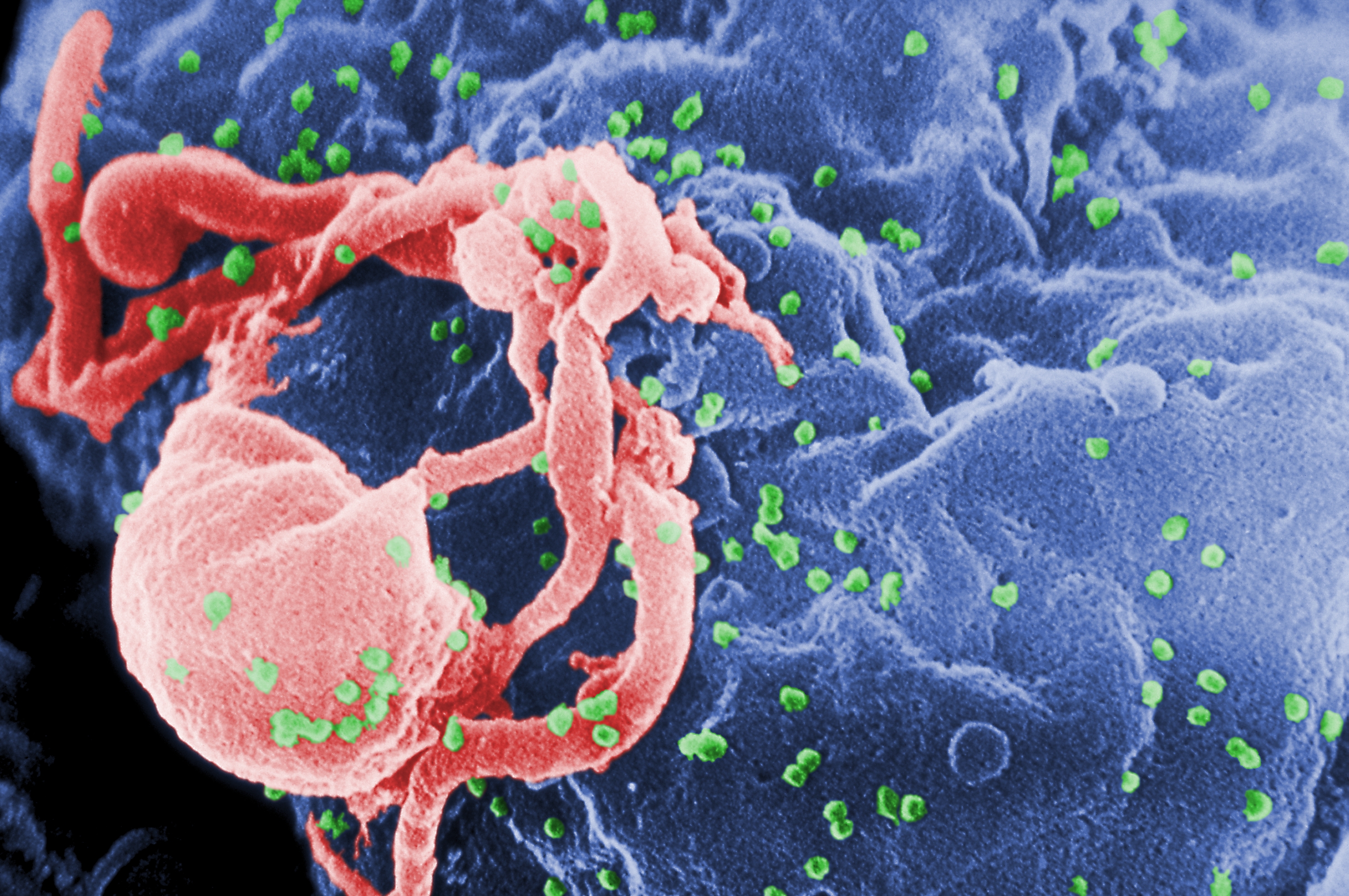
Microscope image of HIV-1 virus


35 million people are believed to be HIV-positive in the world today. The UN published a press release, stating it believed as many as 19 million of these 35 million people don't even know they have it.

That is an eye-watering 54% of total sufferers worldwide.

Last week, red-top newspaper The Sun reported an eye-grabbing story: someone famous has allegedly been diagnosed with HIV.

We're supposed to care, because they reportedly have a load of famous exes. It could be anyone in Hollywood, the story suggests.

Delete the word "famous" from my earlier sentence, though, and you start to see a problem with the story.

The Sun has inadvertently started a "guess-who?" witch-hunt in Hollywood. People suffering in private will almost certainly feel reluctant to speak up about their diagnosis, with stories of this nature.

The Sun's coverage of this story is embarrassingly dreadful. The celebrity's name is omitted, but the damage is being done already.

The story even quotes an ex-Terrence Higgins Trust person, on the subject of stigma. The writer has pretty much slapped themselves in the face, writing this article.

Advances in medical science mean that HIV-positive status is no longer a death sentence. However, sufferers remain stigmatized, and it's a sad fact, but many assume still don't quite get how the disease actually spreads.

The Sun is no stranger to fear-mongering, on the subject of HIV/AIDs. As this link shows, The Sun and other newspapers were guilty of creating an atmosphere of ignorance and fear about this diseases, which was discovered in 1980.

Note: World AIDS Day is on 1st December 2015, and I hope to have a more in-depth story on the subject by then.

Facts roundup - 15th November 2015 (CORRECTION)

CORRECTION: The attack at Garissa University in Kenya took place back in April. The original post I made stated it as if it was a more recent event. I have changed the article accordingly. Apologies for this mistake.

As a side note, I intend to write a separate article on the issue.

It would be fair to begin by saying, this has been a raw week for everyone. The French are now in a state ofmourning, after attacks on their soil. Here are a few points of interest and reminders of what's happened during this turbulent week.

1.) 13th November was designated "World Kindness Day" in 1998


One of the most horrific acts of terrorism committed in Europe since the Second World War has resulted in over a hundred deaths.

A national emergency has been declared, and France has officially gone into a three-day period of mourning.

At the time of writing, the death toll has risen to 132.

7 suspects were believed to have perpetrated a series of bombings near Stade de France, as well as a series of shootings outside cafés and restaurants.

2. ) An suspect man is currently being sought after by French authorities

Abdelslam Salah, is aged 26 and a native Belgian. He is 175cm tall, and authorities have warned the public that he is "dangerous".

3.) Story re-circulates about attack at Garissa university in Kenya al-Shabab (revised story)

A number of media outlets, including this blog erroneously reported that a university attack in Kenya had just occurred. In actual fact, the assault had taken place back in April 2015. I apologize unreservedly for not double-checking before writing the original article.

Along with many others, I am curious to discover why the story has begun to re-circulate on social media in this way. When writing the original article, I did think, the story seemed familiar.

There has been an effective effort on social media to publicize the event, as if it had just happened, and I think it has been very thought provoking.

In April, Garissa University in Kenya had been assaulted by militants from al-Shabab. The death toll totalled over 140. It was reported that the militants were singling out Christians on the campus.

The Kenyan government named Mohammed Kuno as the supposed mastermind of this attack. There is a bounty of 20 million Kenyan shillings (approx. £140,000) on his head.

3.) IS executioner "Jihadi John" may have been killed in a drone strike


This was a story that got front-page coverage in the papers during the week. Jihadi John was one of ISIL's high-profile executioners, who had taken part in filmed executions of foreign hostages, ranging from journalists to aid workers, from America, the UK and Japan.

In an operation by American drones, Jihadi John was reportedly killed by Hellfire missiles from a drone strike, while waiting in a car.

American military spokesman, Steven Warren, was quoted in the New York Post, saying the car was "evaporated" by the Hellfire missile strike.

4.) Hillary Clinton has called on Turkey and the Gulf States to do more, to help tackle ISIL

During last night's Democrat Party debate, Presidential hopeful Hillary Clinton said "It cannot be an American fight", saying Turkey and the Gulf states must step up and do more, to defeat ISIL.

5.) Myanmar's President vows smooth handover of power

One of the brighter spots during the last week's events. Aung San Suu-Ki, leader of the opposition National League for Democract Party, has stormed to victory at the ballot box.

The NLD is believed to have taken 387 of 478 seats contested in a dramatic general election last week. Results for 80% of total seats have been announced, with the rest expected in the coming days.

6.) Libyan leader of ISIL reportedly killed in air strike by US

Very recent story. On Friday, US forces performed an air strike on a compound in Derna, a port-city in eastern Libya.

Abu Nabil was the target of the strike. According to the Pentagon, Nabil had been a "long-time al-Qaeda operative"

ISIL have been making attacks in Libya, which remains a country in crisis, following the civil war.

Wednesday, 11 November 2015

Rise of the right-wing crazy - An American phenomenon

There's a new disease, running through the bloodstream of American politics. Meet the right wing crazies.

2016's GOP candidacy is still up in the air, with as many as 15 different people putting themselves forward. Here are some of the fruity, nutty or just plain insane facts about some of the contenders this year.

1.) Ted Cruz believes non-Christians should not be allowed to run for President

This echoes something a fellow candidate made, earlier in the campaign. Ben Carson had controversially alleged that Muslims shouldn't be entitled to run. He claimed Islam was not consistent with the US constitution.

The US constitution actually doesn't discriminate people from running, purely based on religious grounds. As long as you're a US citizen, born in the country, it should be perfectly fine.

This sad declaration by two candidates during the campaign is sad, because it makes it pretty clear that these two gentlemen would defend their right to religious freedom, at the expense of the freedom of others.

2.) Ted Cruz, Bobby Jindal and Mike Huckabee attended a shockingly nasty event

At a conference on religious liberty in Iowa, these three GOP presidential candidates were in attendance. The proceedings were led by a radical Pastor, Kevin Swanson.

During a rant which makes you seriously question his sanity, Kevin Swanson yelled the following:

"It's not a gay time! These are people with sores!...don't carve happy faces on open, pussy sores!"

Swanson also made the controversial suggestion that America must repent, for doing something as sinful as...reading Harry Potter books!

In Swanson's view, readers must repent, as the Harry Potter books contain a gay character (Albus Dumbledore), who serves as a mentor to the young wizard.

3.) Donald Trump wants to build a big wall between the US and Mexico

Donald Trump has made no secret what his views on Mexicans are. At the launch of his campaign in June, Trump alleged that Mexicans coming to the States were "bringing drugs, crime and rapists" over from Mexico.

To remedy this problem, Trump has promised to build a "great, great wall". What a wonderful new idea.

If you don't like a country, you can just block them out with bricks, mortar and concrete. To put the icing on the cake, Trump would ask the Mexicans to pay for this great wall.

4.) Ben Carson really doesn't like answering questions about his personal life

Carson comes to the fray, as a former neurosurgeon, but he's started to become a natural, at evading questions.

After people started pointing out inconsistencies in the stories he told about his past, he's not seen keen to big it up anymore.

When asked about the subject, Carson suggested people "go jump in a lake" if they wanted to keep probing about his past, following last night's GOP debate.

Carson has made the mistake of not getting his story straight, before running for high office. He's also acting offended when he should be explaining the matter.

5.) Republican voters actually like Ben Carson and Donald Trump

It's hard to believe, but a significant amount of the Republican voter base actually imagine Trump or Carson facing the Democrats in 2016.

Trump has been consistently topping poll after poll, by a wide margin, since June. Ben Carson has caught up, and actually been leading in some polls, of all the candidates running.

The problem with both candidates is quite simple though: the United States has changed so much, since the last Republican was in the White House.

Voters are turning away from the Republicans, for their perceived lurch to the right, on issues like abortion, gay rights and racial tensions, at a time when the country as a whole is actually becoming more liberal.

The GOP is at risk of being locked out of the White House for the foreseeable future. Political purity can be an admirable quality, if you're standing up for policies that genuinely address concerns of the actual population.

Purity can become toxic, however, if a political party is mourning a rose-tinted world that never was.

Monday, 9 November 2015

Top 5 British Political Scandals

Some politicians go down in history, because they get to the top. Some are remembered because they get so far, and then fall even further. Some do both.

Here are a list of five truly shocking political scandals, spanning from the early 1960s to 2015.

1.) The Profumo Scandal (1963)

Christine Keeler - the woman who arguably brought down a government

One of the first major political scandals of the postwar years.

The West was locked in a stalemate with the Soviets. A group of cool-headed minds on both sides were all that kept Planet Earth from becoming a radioactive wasteland.

In this era of Mutually Assured Destruction, a government minister, called John Profumo held the spooky title, Minister for War. It was a role that had existed since the 1790s. Profumo's job was equivalent to the job done by the Secretary of State for Defence nowadays.

A house party in the summer of 1961 was where it all started. Viscount Astor, a wealthy Conservative MP-turned-peer had invited a load of big names in the world of politics and the arts, to his home, Cliveden House.

John Profumo was in attendance at this party, when he saw a young woman, frolicking in the swimming pool on the grounds of this lavish house.

Her name was Christine Keeler. She was a model, attending the party as a plus one, alongside close friend and socialite, Stephen Ward.

Keeler would engage in a short affair with John Profumo, soon afterwards, but there's no definitive information how long it actually was. However, controversy would later arise, when it was alleged Keeler had simultaneously been conducting an affair with a Soviet naval attaché, Yevgeny Ivanov.

If this was true, the government minister responsible for the security of the country was actually compromising it, all because of the company he chose to keep.

The scandal led to Profumo resigning, after essentially lying to the Commons about the affair. A trial also ensued, relating to Stephen Warrd being accused of living off immoral earnings (an old-fashioned way of saying prostitution).

Viscount Astor found himself dragged into the story too, and was even accused of having an affair with Mandy Rice-Davies, a friend of Keeler.

One of the most memorable moments of the Ward trial was when Astor's defence counsel insisted Astor had not conducted an affair with her, to which Rice-Davies was quoted as having said "Well, he would, wouldn't he?".

This riposte is so memorable (and often misquoted), because many believe it represented a shift in mood, from a stiff-upper lip society in the early 20th Century, to a less deferential one, in the 1960s; a more permissive Britain, where no guilty politician could bury their secrets any longer.

The Tory government failed to recover from the fallout of this scandal, as well as the fallout from a weak economy, in the early 1960s,

This Tory government was eventually ousted by Harold Wilson's rejuvenated Labour Party in October 1964. Some would go as far as to say, the Profumo Scandal was simply the straw that broke the camel's back.

2.) The Ousting of Margaret Thatcher (November 1990)

Margaret Thatcher's ousting in 1990 was quick and final - "Treachery with a smile on its face", she would later recall


Few moments of British political history are so brutal as the ousting of Margaret Thatcher, in November 1990.

Mrs Thatcher won three successive elections, curbed union powers and rolled back the state. These achievements were only really possible, thanks to the lack of a powerful opposition. The Labour Party slumped into a depressive episode, following the 1979 and 1983 election losses.

By the late 1980s, the government assumed (mistakenly) that their reforms had created a sustainable economic recovery. In actual fact, they had fueled a credit boom and a housing bubble.

The days surrounding Mrs Thatcher's political demise were dark ones indeed. The unsustainable boom had turned into a bust.

Mrs Thatcher had attempted to introduce the controversial Poll Tax, and she had alienated herself from her own government colleagues.

Mrs Thatcher could have quite probably clung onto power on into the 1992 election, if it wasn't for the fact that her own party had lost faith in her. They had launched a leadership bid against her. The move was highly unusual and unprecedented, in the post-war era.

In a move she would later describe as "treachery, with a smile on its face", Mrs Thatcher was approached by colleagues, and told that she probably could not actually win a second ballot for the party leadership.

On a chilly November morning in November 1990, Mrs Thatcher tearfully spoke to the press, announcing her resignation as Prime Minister and Tory leader. The Iron Lady had rusted away.

Mrs Thatcher and her husband Denis jumped into a waiting car, and in one photograph taken of her departure, Mr Thatcher can be clearly seen, giving one last look at the house she had called home, for 11 years, as tears stream from her eyes.

3.) John Major's "Back to Basics" campaign

John Major's "Back to Basics" campaign opened the Tories up to accusations of hypocrisy in the 1990s

John Major had the mammoth task of being the British Prime Minister who succeeded Mrs Thatcher. He had been risen through the ranks of the Conservative Party, since becoming an MP in 1979.

Mrs Thatcher's Iron Lady had been ditched in favour of a quite plain-speaking politician, who would have been well-suited to the era of Tory government in the 1950s.

However, John Major had assumed the role of PM at a time when deferential attitudes had been utterly exhausted. He lacked the charisma to re-energise his party, and prepare it for future government.

Spitting Image, a satirical puppet-Punch and Judy style programme, openly mocked politicians on a weekly basis. In her prime, Mrs Thatcher was depicted as having crazy boggly eyes.

In the more satire-driven times of the 1990s, John Major seemed a little bit like a grainy photocopy of a Tory leader.

He could make a speech to excite the country's conservative heartlands, but it just wasn't enough to win over the entire electorate. It was no surprise that Spitting Image decided to make his puppet completely grey.

Following a brutal recession, Major had only just scraped through and won the 1992 election.

The jubilation at the prospect of a fourth term for the Tories was short lived; by September, the UK had been forced out of the ERM, a currency system that served as a precursor to the Euro.

In a desperate bid to win back the electorate, John Major made a teeth-curling appeal to get Britain "Back to Basics", in the 1993 Tory party conference.

Major envisioned Britain in the year 2043; a Britain of "long shadows on cricket grounds...warm beer" and, to quote George Orwell, "old maids bicycling to holy communion...".

Major's words came back to haunt him and his government, when numerous scandals started to emerge, involving his own MPs. It would be fair to say Major was like a supply teacher, dealing with a rowdy class. He commanded little authority over his government.

Some Tory MPs found themselves caught in compromising sexual scandals. Others were accused of sleaze. The Tory party's deputy chairman resigned in 1994, after calling the Germans "warmongers".

History seems to have repeated itself for the Tories in the 1990s. It took them over twenty years to win another election outright. You'd expect the party faithful will have learned their lesson by now.

4.) MPs's expenses scandal (2009)


This scandal had been brewing in secret for many years. It was a testament to the Freedom of Information Act 2000.

Journalist John Ungoed-Thomas sent an FOI request to see MPs' expenses in the mid 2000s, and was followed by journalist/freedom of information campaigner Heather Brooke.

Intriguingly, MPs in the 2005-10 Parliament made attempts to exempt themselves from the FOI Act, in votes on the floor of the chamber.

By 2008, a tribunal decided that the expenses of 14 MPs could be published. In early 2009, Harriet Harman, the then-leader of the House of Commons, tabled a motion in the Commons, to try and prevent any further information being made public.

However, the tide of public opinion turned on Harman, Eventually, it was agreed that full disclosure would be made on 1st July 2009. However, the Daily Telegraph newspaper paid for an early scoop, and leaked the story in May.

One MP was revealed to have filed expenses for a duck house. Others had used theirs to fund second homes, and travel arrangements. In the runup to the 2010 general election, a phrase was swirling around, with newspapers dubbing this batch of MPs "the Rotten Parliament".

Some MPs were put on trial as a result of the scandal. It damaged the public's trust in Parliament, but was especially devastating for the incumbent Labour government, under Gordon Brown.

Brown never recovered his fortunes, and Labour suffered a devastating defeat in the following year's general election. Labour remains in opposition to this day, and trust in Parliament has yet to fully recover from this scandal.

5.) The "Call Me Dave" scandal


A story that has just started to fade from the day-to-day headlines is the publication of an authorised biography of David Cameron, satirically titled "Call Me Dave".

In conjunction with Sunday Times journalist, Isabel Oakeshott. Lord Ashcroft penned a book which made a series of controversial and highly questionable claims about the Prime Minister.

One such allegation involves a distasteful ritual involving the Prime Minister and a pig's head, when he was a student at Oxford University. Doubts have surfaced, however about the truth of the matter.

The ritual was alleged to have been needed for students to enter the so-called Piers Gaveston society.

However, those close to the Prime Minister, plus other commentators have been quick to repudiate claims that he was even a member of the Piers Gaveston society.

It's also doubted that such rituals even took place. Lord Ashcroft and Isabel Oakeshott insisted that a reliable source, a current government minister, who also went to Oxford, had approached them.

The pig head story is based on claims made by this mysterious source, that photographic evidence actually existed of the ritual, but it remains to be seen, if it even took place.

The scandal in this story isn't so much the allegations in the book itself. The scandal emerges from the fact that the biography sounds quite like a revenge piece.

Lord Ashcroft had provided the ailing Conservative Party with much support over the years, yet had not been given any senior ranking government jobs, when the Coalition was formed.

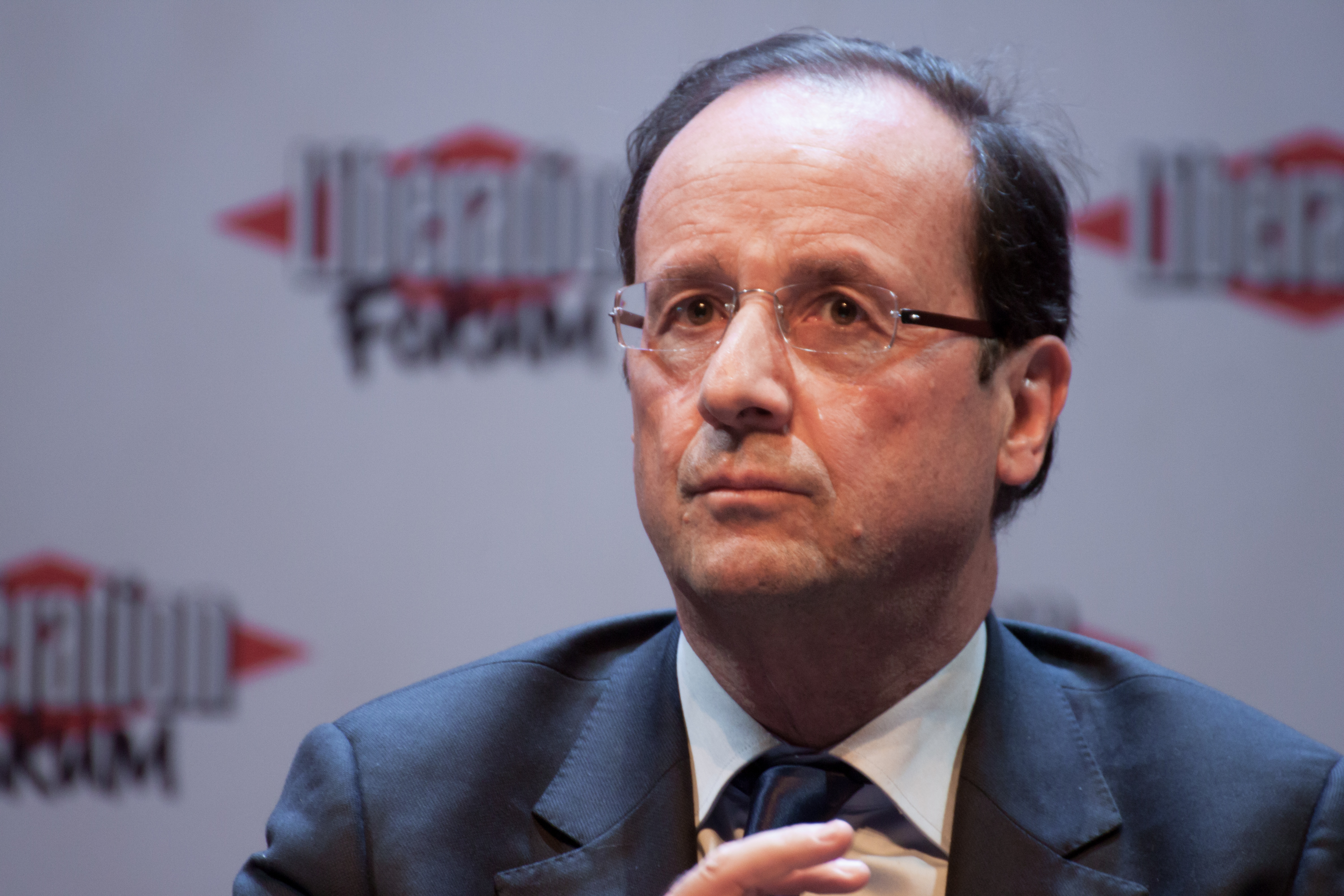
It is written in a similar vein to Valerie Trierweiler's book, "Merci Pour Ce Moment", in which French President Francois Hollande's ex-girlfriend made a serious of shocking allegations, after it had emerged he had allegedly conducted an affair with a French actress.
Tuesday, 3 November 2015

China's One-Child Policy (or Bye Bye Baby?)

Is it right for governments to decide how many children we can have?
China's decision to move away from the One-Child policy is a much-needed correction. Oh how ironic. A policy designed to prevent overpopulation is now being succeeded by a policy to spur population growth. However, just as China moves towards encouraging larger families, the UK government seems to be encouraging the opposite. Why is this? 

Since the earliest times, China has always represented a massive chunk of the world's total population. By the late 1970s, the Chinese government was alarmed at the rapid rate of population growth, and so it initiated one of the most controversial population control policies ever implemented.

The government enforced a One-Child Policy, although it was not quite so draconian as it seemed. Uttering the phrase "One Child Policy" gives you the impression that every single woman of child-bearing age is strictly forbidden to have more than one child, OR ELSE! 

In actual fact, the policy made sure that rural couples were exempt from the rule. Rural couples tend to be responsible for about two thirds of all children born in China. The policy is only really centred on the urban minority of the population, and as a general rule, urban dwellers choose to have smaller families anyway. As time wore on, the government loosened the rules. For example, it allowed couples to have a second child, if either of the parents had been a single child.

The policy was seen by some to be practically useless, given that China was already seeing a sharp fall in birthrates, in the decade prior to the One-Child Policy being announced.

Last week, the Xinhua News Agency announced the government's intention to scrap the policy altogether, in order to remedy a feared demographic problem, in the future.

Bye bye baby?

Just as China moves to save itself from demographic Armageddon, the UK appears to be doing the opposite, but in a far more subtle way. It might be bold to say so, but it really does seem as if the UK government is beginning to silently put policies in place, that support a two-child country.

As the Financial Times indicated in June, £12bn worth of planned cuts to welfare include limiting child benefits to households with one to two children in future. In other words, the government wants you to think long and hard, before going ahead, and having that third child.

But there's a big problem, that nobody seems to have actually acknowledged, when it comes to the UK's own demographic situation. The UK has, in effect, been a two-child country for over forty years. Displayed below is a chart, showing the average number of children a woman of childbearing age would expect to have during her lifetime, (England and Wales 1941-1972 and UK 1973-2015 provisional). Note the post-WW2 spike, the 1960s Baby Boom, the 1970s-1990s slump, and then the recent Millennial echo boom.

Source: Office of National Statistics

The horizontal blue line represents the 2-children-per-woman threshold. In order for a population to stay stable, the size of the next generation has to be equal to that of the preceding ones. Two children make up for the two parents. The UK's sub-replacement fertility rate has been in place since the mid-1970s, owing to the invention of the Pill, legalization of abortion and simply personal choice. People just don't feel like having as many kids as they did. If the UK had no net migration (which is not very likely), you would expect the UK population to stabilise and possibly decline in the coming decades. This is why net migration might actually be the UK's saving grace in years to come.

In short, a government policy to ensure households have 2 children may backfire spectacularly, and push already-low birthrates down to subterranean levels. 

Monday, 2 November 2015

Car-crash political interviews

Interviews can be terrifying experiences, for interviewers and interviewees alike. It's nice and easy, when you see casual conversations between two old friends in private places. However, televised interviews between politicians and journalists put people into glitzy, artificial environments. We expect them to behave as if everything's normal, when it really isn't. As these five cases show, sometimes the pressures of televised questioning can push reporters and politicians to breaking point.

1.) Angela Constance, Scottish National Party (The Sunday Politics, November 2015)

When appearing on a morning television show, it's probably best to ask someone whether you're going to be live on air, before the cameras actually roll. In the middle of a seemingly ordinary live studio interview, Scottish National Party MSP Angela Constance accidentally referred to events in the year "Twenty thousand and twelve", before correcting herself. She had, of course, actually meant to say the year 2012. It was an innocent slip of the tongue; people make mistakes on TV all the time. There was actually nothing to complain about here, you can't expect someone to keep it up, the whole time they're on air.

The interview would have surely faded into obscurity, were it not for the fact that Constance wrongly assumed it was a pre-recorded segment. As a result, she made a point about fluffing her words, and immediately requested the interviewer if they could do a retake. To her horror, you never swim in the same river twice, when speaking on live television. Cue a look of controlled horror flashing over Constance's face.


2.) Chloe Smith grilled by Paxman (Newsnight, June 2012)

It was June 2012; a troublesome summer for the coalition government. The budget back in March 2012 had started being dubbed an "omnishambles", a word borrowed from popular satirical show "The Thick of It".

Some of the controversies it spawned included a "pasty tax", and even a "caravan tax". It wasn't long before the government was forced into a series of awkward U-turns, one by one. The Omnishambles budget died a slow but painful death, by a thousand paper cuts.

In June 2012, junior minister Chloe Smith was invited to be interviewed by Jeremy Paxman, live on Newsnight. This followed a perceived U-turn over fuel duty, by Chancellor George Osborne. What happened next made grim viewing. Over the course of the interview, it became clear that Smith had been sent off to the interview, in place of the Chancellor himself, without the necessary facts to make her case.

When asked on her own views about the U-turn, Smith proved to be moderately evasive, but Paxman was having none of it. It was broken up, only by an abrupt but short instance, when Smith grappled with a frog in her throat, as evidenced below.

The message of the story: if you make a controversial decision in government, have the bravery to stand by it. Don't shirk responsibilities, by forcing a junior minister answer for it, in your place. It's just cruel.


3.) Alastair Campbell incenses Adam Boulton (Sky News, May 2010)

The 2010 general election was a close-run contest. It left the UK with its first hung parliament, since the 1970s. Political loyalties had seemingly split the country right down the middle. The bruised Labour government was led by a Prime Minister, who had failed to actually win an electoral mandate. The opposition party was led by an MP who was criticised for being a career politician.

In a rare moment of interview madness, Sky News presenter Adam Boulton lost composure, when conducting a live interview with former Labour spin doctor, Alastair Campbell. Campbell slyly sent Boulton into an angry mood, telling him to "calm down". If you know anything about people, you'll know that the last thing you tell an incensed person is to calm down, especially in a patronizing tone. 

Understandably, Boulton exploded in fury at Campbell, curiously jabbing his finger at himself. "Don't keep saying what I think!" he exclaimed. From the way this interview went, it's highly doubtful either of the two men will be on each others' Christmas card lists anytime soon.


4.) Chuka Umunna walks out of interview with Dermot Murnaghan (January 2015)

Before his short-lived bid as a Labour leadership candidate, Chuka Umunna was making a name for himself, as the Shadow Business Secretary. In this rocky interview, Sky News presenter Dermot Murnaghan stealthily switched the topic of conversation towards the issue of radicalization and extremism in Britain. 

A senior government minister had written a public letter on the subject, and it entered into dicussion. Mr Umunna made it clear to Mr Murnaghan that he had not read the letter in question, and was not in a position to speak about it yet.

Murnaghan made the mistake of suggesting that Mr Umunna could return half an hour later, to continue the conversation, once he had read the letter. When Mr Umunna slammed Murnaghan for being "unfair", Murnaghan quipped "So you're not going to speak, until you get the party line, right?". Umunna responded, by flapping his hand in the air, as if to swat an imaginary mosquito, before walking out of the interview.


5.) Sarah Palin speaks with Katie Couric (PBS, September 2008)

Nothing quite defined Sarah Palin's image in the minds of millions of people, like her interview with US journalist Katie Couric, at the height of the 2008 presidential election campaign. Sarah Palin was the then-governor of Alaska. 

She had just been chosen as the running mate to veteran Republican presidential candidate, John McCain. People just had no idea what she would be like on the campaign trail, of the most heated presidential campaign since the 1980s. It seemed as if she had been conjured out of nowhere.

In an interview later parodied by a sketch on Saturday Night Live ("I can see Russia from my house!"), Couric probed the Alaskan governor on comments she had previously made about Alaska's proximity to Russia. 

In a previous interview with another interviewer, Palin had implied that Alaska being so close to Russia was a valid form of foreign policy experience, in and of itself. Couric went further, also asking what Mrs Palin's reading habits had been.

In response to the comments about Russia and Alaska, Palin said with some satisfaction: "As Putin rears his head, and comes into the airspace of the United States of America, where do they go? It's Alaska...". 

Palin's answer to Couric on the subject of her past reading habits attracted further ridicule. Couric asked "What newspapers and magazines did you regularly read, before you were tapped for this...to stay informed and to understand the world...what specifically?" Palin responded hastily, saying "Erm...all of 'em...any of 'em...I have a vast variety of sources..."

The casual manner by which Governor Palin answered the questions led many to question whether she would make a sound Vice President. It's funny to note the hand gesture Governor Palin employed, when speaking about Russia. It's almost as if the audience's votes are buzzing around her face, and she's desperately trying to grab them, before they fly away.


Sources

1) Angela Constance interview

https://www.youtube.com/watch?v=DnQT2ypxF7A

2.) Chloe Smith interview

https://www.youtube.com/watch?v=aqiFr0uppVk

3.) Alastair Campbell interview

https://www.youtube.com/watch?v=sZKmWdgiAq0

4.) Chuka Umunna interview

https://www.youtube.com/watch?v=PmkRwJ2f8z0

5.) Sarah Palin interview

https://www.youtube.com/watch?v=nokTjEdaUGg