Sunday, 22 November 2015

Brussels latest

Brussels is to remain on high alert, in the face an imminent threat, following a weekend lockdown.

Brussels schools and universities, as well as the city's metro system are expected to stay shut for the next few days.

Belgian Prime Minister Charles Michel spoke at a press conference earlier today, warning of the possibility of a Paris-style attack on the Belgian capital.

Authorities say there is a risk that multiple attacks may be attempted in different locations across the city.

This comes amid a manhunt for suspected Paris attack conspirator and Belgian national, Salah Abdelslam. Abdelslam remains at large, whereabouts still unknown at present.

Belgian security services strongly urge the Belgian public to refrain from publicising any operations they are currently carrying out, as it will risk jeapordizing their efforts.

Over a week after an attack in Paris, which left 130 people dead, another European city is holding its breath.

Saturday, 21 November 2015

Belgium alert, Bamako hotel raid and Paris attack latest

Belgium on high alert

Belgian authorities have warned the public about the possibility of an imminent threat.

It is understood that the Brussels metro systems have been closed, and won't reopen until tomorrow afternoon.

Public gatherings, including football matches have been cancelled.

Mali hotel attack

19 people were killed in an attack on a lavish hotel in the city of Bamako in Mali, earlier this week. 130 hostages were held but finally freed.

The government has announced a 10-day state of emergency. Reports suggest at least two gunmen were responsible for the attack, but more may have been involved.

Paris attacks (UPDATE)

The mastermind of the Paris attacks, Abdelhamid Abaaoud has been confirmed dead, after a raid on a flat in St Denis, in the Parisian suburbs.

Initial reports about a female suicide bomber have been retracted. Abaaoud was reportedly dentified through finger prints, after it was believed gunfire during the dramatic raid left his body virtually unidentifiable.

Thursday, 19 November 2015

ISIL latest (19th November 2015)

Five days on from one of the most devastating attacks on French soil, residents of St Denis woke up to the sound of rapid gunfire.

Unconfirmed reports insist that the ISIL mastermind behind the 13th November attacks, Abdelhamid Abaaoud, has been killed in a raid on a flat in St Denis, a spot in the northern suburbs of Paris.

It is understood that a 100-strong squadron of anti-terror police stormed Abaaoud's flat, and a fire fight ensued, resulting in 5,000 rounds of ammunition being fired.

The reason why there is great uncertainty about whether Abaaoud is dead is because the bodies found in the flat had been disfigured beyond recognition, by a suicide bomb.

This bloody turn of events comes at a time when it's now believed, contrary to initial reports, that Abaaoud had been masterminding the attacks, not in Syria, but on French soil itself.

Abaaoud was Belgian-born, and believed to have fled to Syria back in 2014, to aid ISIL. His presence in France raises questions about border security in Europe.

French, American and Russian forces continue to pound Syria with air strike after air strike.The i Newspaper reports today that as many as 33 ISIL fighters were killed, just in the last three days worth of air strikes alone.

Russian airliner latest

An online magazine used by ISIL, titled Dabiq, has reportedly gone into detail about how ISIL operatives might have brought down a Russian airliner, over the Sinai.

The article, entitled "Just terror" carried an image of a can of fizzy pop, alongside two suspicious-looking components..

The operatives reportedly "discovered a way to compromise the security at Sharm el-Sheikh airport", by seemingly concealing an explosive device inside a similar can of fizzy drink.

Russian investigators claimed this week that the airliner had been brought down by a homemade explosive, "with the power of 1.5kg of TNT".

Tuesday, 17 November 2015

Silly UK Laws

We all like to think we're law-abiding citizens. But watch out. You may have broken the law without even realising it. Here are a list of bonkers UK laws, most of which hold true today. The last one's a real jaw-dropper.

1.) Causing a nuclear explosion is illegal


If you have any plans for mass atomic-arson, you'd better watch out. The Prohibitions and Inspections of 1998 says anyone who causes a nuclear explosion faces life imprisonment. Can't say I didn't warn you.

2.) You're not allowed to sell bits of dead whales


Photo by NOAA.gov  / CC BY


Whales are reportedly classified as "Royal fish", and an old statute supposedly says that a King is entitled to the whale's head, while the Queen gets to keep the tail. Keep your eyes peeled, for maritime miscreants, dragging whale carcasses around.

3.) Singing expletive-laden songs in the street is illegal


The next time you find yourself singing a profane little ditty in the street, you might be breaking the law. Under the Metropolitan Police Act of 1839, people must not "use any profane, indecent or obscene language to the annoyance of the inhabitants or passengers [of thoroughfares]". Something to keep in mind, next time you're on a night out.

4.) It's an offence to import Polish potatoes into England and Wales unannounced


This wacky piece of legislation was introduced in 2004. If you happen to be in Poland, pick up a sack of spuds, and feel like bringing them back home to England and Wales, you need to have "given written notification to an inspector, at least two days prior to the intended date of introduction".

5.) For twelve years, celebrating Christmas was illegal


Following the end of the English Civil Wars and the execution of King Charles I, England, Ireland and Scotland briefly became a protectorate, with Oliver Cromwell serving as its Lord Protector. Cromwell was a Puritan. 

The word "puritan" is now used with negative connotations. Puritans are characterised as kill-joys. The actual Puritans in days of yore were simply Christians intent on erasing all traces of Roman Catholicism from English Christianity.

In 1647, there was essentially a war on Christmas. Bah Humbug! Mince pies were also banned. The whole purpose of it was that Roman Catholicism was viewed as overly idolatrous, that Christmas was a festival with no biblical justificaiton, and that people must be more frugal. 

Apparently, instead of festive celebrations, people were encouraged to partake in a day of fasting. For twelve years. Try getting your family to do that, nowadays!

Monday, 16 November 2015

Garissa University attack - Comments

The recent re-circulation of a story highlights the importance of fact-checking, and making a conscious effort to engage


Just a matter of hours after the attacks in Paris on 13th November, a story began swirling around social media.

An attack had reportedly taken place at a university in Kenya, perpetrated by al-Shabab militants. It all seemed like a volatile weekend. Or at least that was how it seemed.

As explained in the newly-revised edition of my last news roundup, the Kenya unversity attack actually took place back in April. I mistakenly reported it as if it had just happened.

Below, I hope to delve into the story, and find out why people such as myself read the story wrong, and potentially misled others.

This is as much of a message to myself, as it is a message to readers.

1.) The story was presented on social media, as if it had just happened

To put it simply, the story received fresh attention, at a time when everyone was still raw from the bloodshed in Paris.

My reason for mistakenly writing about the story is a result of this. I commend the people who were able to re-circulate the story. If it wasn't for them, we would have forgotten about it all.

2.) People don't check the time stamp on an article

I'm guilty of this. The details of the story seemed familiar, and if I had actually bothered to check the date on zillions of articles on the story, I would have realised it had happened 7 months ago.

I've learnt a hefty lesson from this, especially this point. Journalism thrives off the bond of trust readers have with writers. We depend on journalists to tell the truth. They cannot tell the truth, if they don't put the effort in, and know what they're talking about.

3.) The original attack happened on a different continent. We noticed at the time, but didn't give it the attention it deserved. Our own prejudices got in the way, and we collectively forgot about it

When reading stories about events in other countries, it's very hard to actually take it all on board. I sometimes find it hard to process information in general, unless it's conveyed in a visual medium.

As a result of this, I can say that I remember the shocking images circulating when the attack happened. Pictures tell a thousand words. I think those images will stay with me forever.

However, I made the mistake of not remembering the really important details about the event. Where it happened, how many people lost their lives or who was responsible.

I remember the stories circulating when the original attack happened, and when I was writing the original post, I had a suspicion that something like this had already happened.

However, I don't feel like I made a conscious effort to actually remember it properly, and this all boils down to prejudices.

Our own prejudices mean that we might read about a shooting in Kenya, and we are able to express our feelings about them and show solidarity.

However, if we're westerners, living a cushy life in a busy European city, our brains don't have the know-how to actually fully engage. If we're not living in those environments, day-after-day, our brains effectively wipe our memories clean.

4.) The story highlights the importance of visual storytelling

As explained above, the Garissa story entered into recirculation in written form. If I had made the effort to check broadcast media, I would have realised it wasn't being covered, because it happened 7 months ago.

5.) In an ever-more interconnected world, we need to keep up with news from abroad

Just a suggestion. When something of this nature happens, really try and make an effort to remember it.

Immerse yourself in the story; if you can't physically be in that space, try and find pictures, and at least pretend that you are standing in someone else's shoes.

Take note of how you feel, when a story hits you. If you can't get over the subconscious stumbling blocks, at least try and say how it affected you, or try to imagine it, if it happened where you live.

Sunday, 15 November 2015

Reporting of HIV - What The Sun newspaper has done wrong

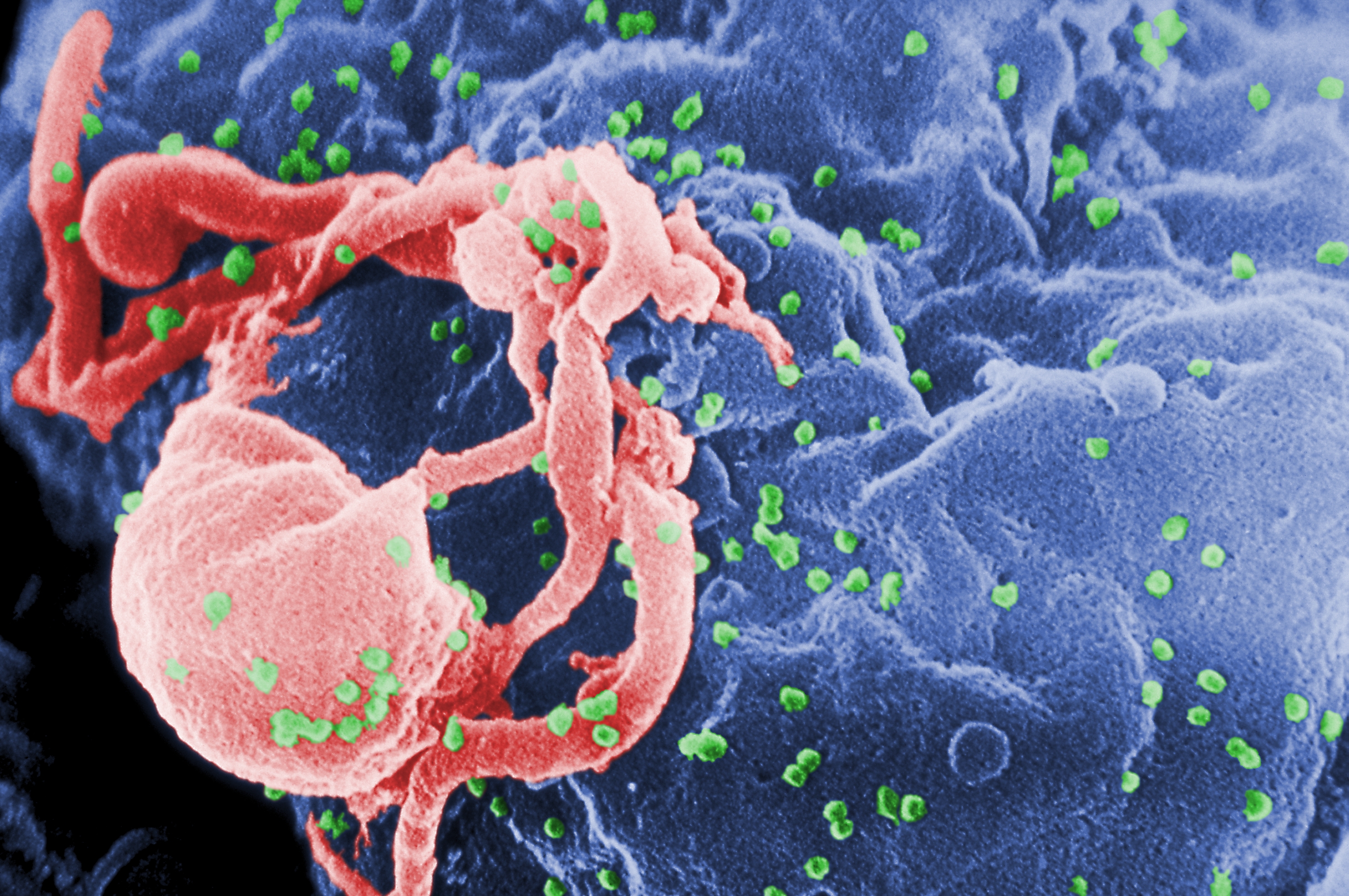
Microscope image of HIV-1 virus


35 million people are believed to be HIV-positive in the world today. The UN published a press release, stating it believed as many as 19 million of these 35 million people don't even know they have it.

That is an eye-watering 54% of total sufferers worldwide.

Last week, red-top newspaper The Sun reported an eye-grabbing story: someone famous has allegedly been diagnosed with HIV.

We're supposed to care, because they reportedly have a load of famous exes. It could be anyone in Hollywood, the story suggests.

Delete the word "famous" from my earlier sentence, though, and you start to see a problem with the story.

The Sun has inadvertently started a "guess-who?" witch-hunt in Hollywood. People suffering in private will almost certainly feel reluctant to speak up about their diagnosis, with stories of this nature.

The Sun's coverage of this story is embarrassingly dreadful. The celebrity's name is omitted, but the damage is being done already.

The story even quotes an ex-Terrence Higgins Trust person, on the subject of stigma. The writer has pretty much slapped themselves in the face, writing this article.

Advances in medical science mean that HIV-positive status is no longer a death sentence. However, sufferers remain stigmatized, and it's a sad fact, but many assume still don't quite get how the disease actually spreads.

The Sun is no stranger to fear-mongering, on the subject of HIV/AIDs. As this link shows, The Sun and other newspapers were guilty of creating an atmosphere of ignorance and fear about this diseases, which was discovered in 1980.

Note: World AIDS Day is on 1st December 2015, and I hope to have a more in-depth story on the subject by then.

Facts roundup - 15th November 2015 (CORRECTION)

CORRECTION: The attack at Garissa University in Kenya took place back in April. The original post I made stated it as if it was a more recent event. I have changed the article accordingly. Apologies for this mistake.

As a side note, I intend to write a separate article on the issue.

It would be fair to begin by saying, this has been a raw week for everyone. The French are now in a state ofmourning, after attacks on their soil. Here are a few points of interest and reminders of what's happened during this turbulent week.

1.) 13th November was designated "World Kindness Day" in 1998


One of the most horrific acts of terrorism committed in Europe since the Second World War has resulted in over a hundred deaths.

A national emergency has been declared, and France has officially gone into a three-day period of mourning.

At the time of writing, the death toll has risen to 132.

7 suspects were believed to have perpetrated a series of bombings near Stade de France, as well as a series of shootings outside cafés and restaurants.

2. ) An suspect man is currently being sought after by French authorities

Abdelslam Salah, is aged 26 and a native Belgian. He is 175cm tall, and authorities have warned the public that he is "dangerous".

3.) Story re-circulates about attack at Garissa university in Kenya al-Shabab (revised story)

A number of media outlets, including this blog erroneously reported that a university attack in Kenya had just occurred. In actual fact, the assault had taken place back in April 2015. I apologize unreservedly for not double-checking before writing the original article.

Along with many others, I am curious to discover why the story has begun to re-circulate on social media in this way. When writing the original article, I did think, the story seemed familiar.

There has been an effective effort on social media to publicize the event, as if it had just happened, and I think it has been very thought provoking.

In April, Garissa University in Kenya had been assaulted by militants from al-Shabab. The death toll totalled over 140. It was reported that the militants were singling out Christians on the campus.

The Kenyan government named Mohammed Kuno as the supposed mastermind of this attack. There is a bounty of 20 million Kenyan shillings (approx. £140,000) on his head.

3.) IS executioner "Jihadi John" may have been killed in a drone strike


This was a story that got front-page coverage in the papers during the week. Jihadi John was one of ISIL's high-profile executioners, who had taken part in filmed executions of foreign hostages, ranging from journalists to aid workers, from America, the UK and Japan.

In an operation by American drones, Jihadi John was reportedly killed by Hellfire missiles from a drone strike, while waiting in a car.

American military spokesman, Steven Warren, was quoted in the New York Post, saying the car was "evaporated" by the Hellfire missile strike.

4.) Hillary Clinton has called on Turkey and the Gulf States to do more, to help tackle ISIL

During last night's Democrat Party debate, Presidential hopeful Hillary Clinton said "It cannot be an American fight", saying Turkey and the Gulf states must step up and do more, to defeat ISIL.

5.) Myanmar's President vows smooth handover of power

One of the brighter spots during the last week's events. Aung San Suu-Ki, leader of the opposition National League for Democract Party, has stormed to victory at the ballot box.

The NLD is believed to have taken 387 of 478 seats contested in a dramatic general election last week. Results for 80% of total seats have been announced, with the rest expected in the coming days.

6.) Libyan leader of ISIL reportedly killed in air strike by US

Very recent story. On Friday, US forces performed an air strike on a compound in Derna, a port-city in eastern Libya.

Abu Nabil was the target of the strike. According to the Pentagon, Nabil had been a "long-time al-Qaeda operative"

ISIL have been making attacks in Libya, which remains a country in crisis, following the civil war.